
Granitebaygames
Months of playSix living economiesFree to found

Six companies to build one patient quarter at a time

Granitebaygames is a reading desk for people who enjoy a balance sheet more than a boss fight. We founded firms in six long-running browser economies, kept them alive through price crashes and bad hires, and wrote down what the first week, the second month and the long haul actually ask of you. Choose a market, then choose a pace.

6economies we kept companies in
4score lines on every review
3questions in Ingrid’s quiz
2long guides for new founders
Ingrid’s quiz

Three answers, one company to start

Ingrid has founded a firm in every game on this site. Tell her what you want to run, how often you can check in and what kind of world you want around it, and she points you at a first match.

Ingrid
Sim Companies
#1 · Best overall
8.5out of ten
Top of the ledger

Sim Companies

Sim Companies earns first place because it gets the hardest thing right: every price on its exchange was set by another person. You start with one small building and a modest balance, and from there the whole economy is something you read, not something the game hands you.

Run by Sim Companies s.r.o.Two realms with different starting rulesPrices set entirely by players

Production takes real hours, which sounds like a drawback until you notice how it shapes the week. You set a factory running, close the tab, and come back to decide what the output is worth today. Farms feed plants, plants feed stores, and research raises the quality of what you make. Trading with other companies by direct contract instead of through the open exchange becomes a skill in its own right. Few browser games make supply and demand feel this personal, and fewer let you play it at the speed of a lunch break.

Questions from founders

What new tycoons usually ask the desk

No. Every game here teaches its own logic as you go, and several of our editors started with nothing more than a vague memory of a high-school business class. What helps is curiosity about why a price changed. If you are the kind of person who wonders why groceries cost more in February, you already have the instinct these games reward.

Yes, every game on this site lets you found a company and keep it running for free. Some sell conveniences or extra capacity, and Prosperous Universe has an optional PRO licence that unlocks things like local markets and more ships in flight. Each review spells out exactly where the free tier starts to pinch, so you can decide before you invest weeks.

Kapi Hospital is the gentlest, because there is no market to misread. If you want a true economy sim but a soft landing, Sim Companies is our recommendation: its pace is slow, its early buildings are cheap, and a beginner’s mistake usually costs you an afternoon of output rather than the whole company.

Because slowness is often the design. When production takes hours or the world updates once a day, nobody can win simply by clicking faster, and the market has time to settle between decisions. That rhythm fits a working week well. If you would rather be busy, Kapilands and Airlines Manager in its faster mode keep your hands fuller.

We keep at least one company alive in every game on this site and look in on each of them regularly. When an update changes the shape of a game, such as a new realm, a reworked licence or a different starting budget, we revise the review and note it. If you spot something that has moved before we do, write in.

Not at all. All six run in an ordinary desktop browser, and none of them is graphically demanding. Three also offer a mobile app, which we flag on each card. A larger screen does help with the spreadsheet-heavy games, especially Prosperous Universe, whose interface is built from windows you arrange yourself like a trading desk.

Less than you might fear. In player-run markets, established firms tend to specialize, which leaves gaps a newcomer can fill. Sim Companies even runs a second realm with different starting conditions, and in most of these games a careful newcomer with a narrow focus can turn a profit in the first weeks. Late means humble, not hopeless.

How the books get audited

A full quarter of play before any score

An economy game never shows its true shape in the first evening. The tutorial is always kind, the starter money always feels generous, and the real questions only arrive once rivals undercut you. So each firm here was run for weeks on a live server before we wrote a single score.

01

We incorporate from nothing

Every review starts with a brand-new company on a public server, never a borrowed account with years of capital behind it. We note how clearly the game explains its own systems, how long before the first real decision arrives, and whether an early mistake can sink you or simply teaches you something. New founders deserve to know where the trapdoors are.

fresh accountlive serverearly mistakes
02

We trade against real people

The heart of this genre is the market, so we sell into it, buy from it and get undercut by it. We watch how fast prices react, whether a small firm can find a niche, and how much the game leans on direct deals between players. A market that only moves when the developer nudges it gets marked down hard.

sellingundercuttingcontracts
03

We count the hours honestly

Every game here asks for a different rhythm, from one daily update to constant small adjustments. We log how often we actually needed to check in, which tasks could wait, and where paying would save time rather than open new doors. The weekly time on each card comes from those notes, not from the publisher’s description.

time logfree tiercheck-in rhythm

Where the money for this desk comes from

Granitebaygames is paid for the plain way: some play buttons are partner links, and when a reader founds a company through one, the site may earn a small referral fee. That never moves a game up the ranking. Sim Companies sits first because we would hand it to a friend, and Kapi Hospital sits last because its market is thin, and we say so in the open on both pages.

Six ways to run a business

Which kind of founder are you?

These games share a genre but not a temperament. Some reward patience above everything, some want a steady hand on dozens of dials, and one would rather make you laugh. Find the description that sounds like your own working habits.

Trader

The patient trader

You enjoy watching a price, guessing why it moved and acting before everyone else notices. A market made entirely of players gives you something new to read every day, and slow production means you can do it in a few minutes between other things.

Sim Companies →
Logistician

The interplanetary logistician

You like spreadsheets, cargo manifests and the satisfaction of a supply chain that spans star systems. A fully player-made economy with no combat rewards careful planning, long-term partnerships and an appetite for very large numbers of very small decisions.

Prosperous Universe →
Planner

The once-a-day planner

You want to make your decisions calmly, submit them and let the whole world update overnight. A single daily turn means no one can out-click you, and a business empire grows from the quality of your plans rather than the hours you sit watching.

Virtonomics →
Network

The route-map strategist

You light up at the sight of a world map and the question of which city pair is underserved. Sizing aircraft to demand, borrowing to grow and tuning cabin service per route suits anyone who likes geography as much as finance.

Airlines Manager: Tycoon →
Tinkerer

The hands-on tinkerer

You prefer to adjust things often: a production queue here, a quality tweak there, a quick haggle with another player in chat. A busy, long-running economy with dozens of production buildings rewards the founder who logs in briefly but regularly.

Kapilands →
Caretaker

The cheerful caretaker

You want a business sim without a price chart in sight. Diagnosing patients with absurd complaints, putting them in the right room and slowly growing a clinic into a medical centre is gentle, tidy and quietly satisfying after a long day.

Kapi Hospital →
The six on the books

Every economy we kept a firm alive in

Four of these games are pure markets where your rivals are other players and the numbers move because people moved them. One puts you in charge of an airline on a real map, and one hands you a cheerful hospital full of odd ailments. Each card shows the weekly time it asks and where it runs.

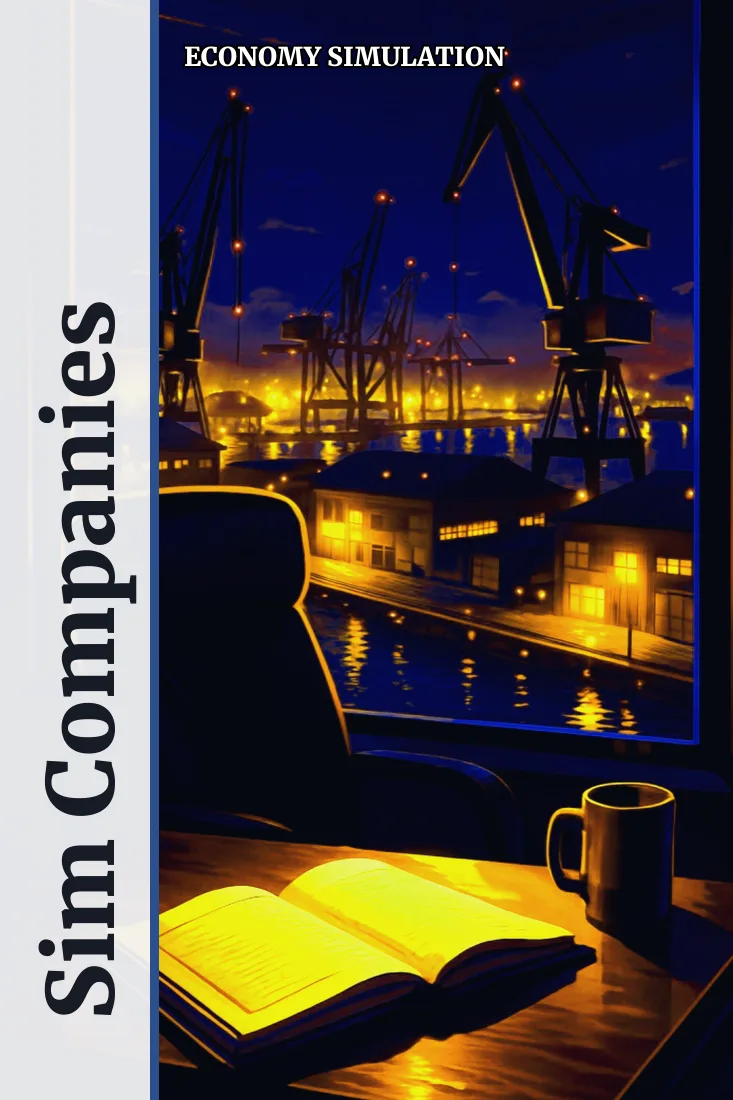
Sim CompaniesBest overall01
Player-market business sim

Sim Companies

A deliberately slow economy where you grow from one small building into a chain of factories, farms and stores. Every price on the exchange was set by another player, production runs on real hours, and direct contracts between companies are a craft of their own. The best balance of depth and calm in the genre.

Raw inputs to retailEntirely player marketSlow by design
Desktop browser; mobile app also available
Depth of the model9
Market realism9
Free-founder headroom8
Fits a busy week8

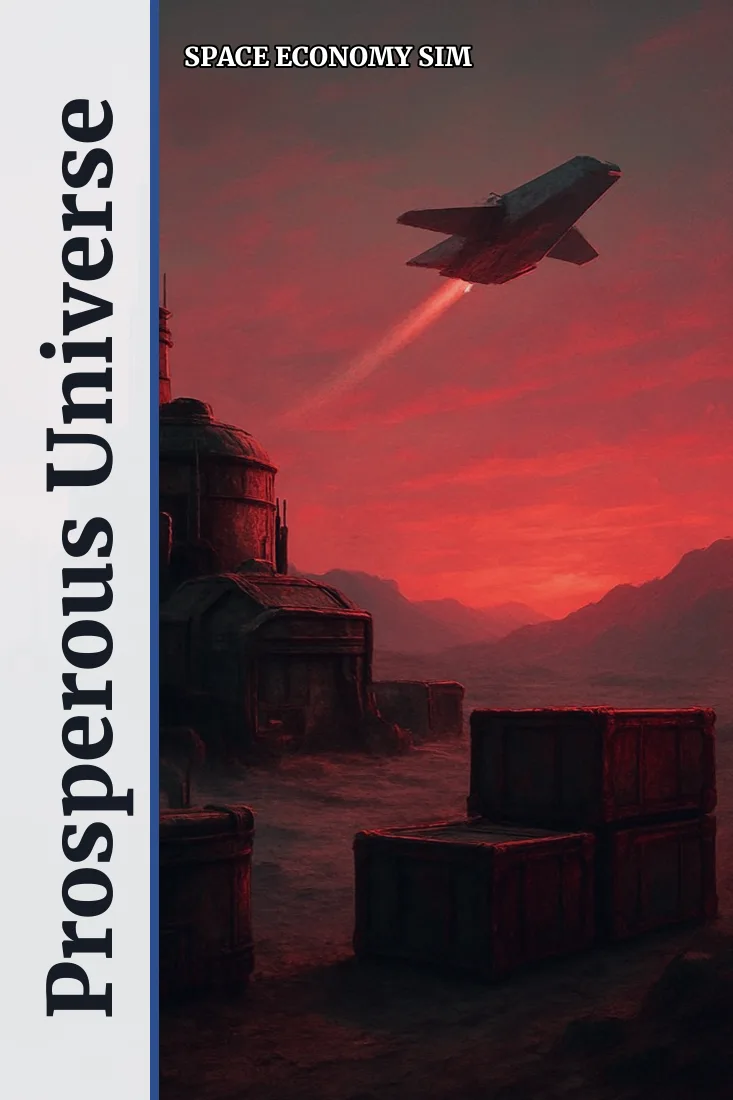
Prosperous UniverseDeepest economy02
Space-economy sim

Prosperous Universe

A space economy where every commodity, from water to ship hulls, must be produced by a real player. You build bases on planets, run production lines, fly cargo between star systems and trade on exchanges that never close. There is no combat at all. It is enormous, demanding and unlike anything else in a browser.

Player-made economyCargo & contractsLive commodity exchange
Desktop browser
Depth of the model10
Market realism10
Free-founder headroom6
Fits a busy week5
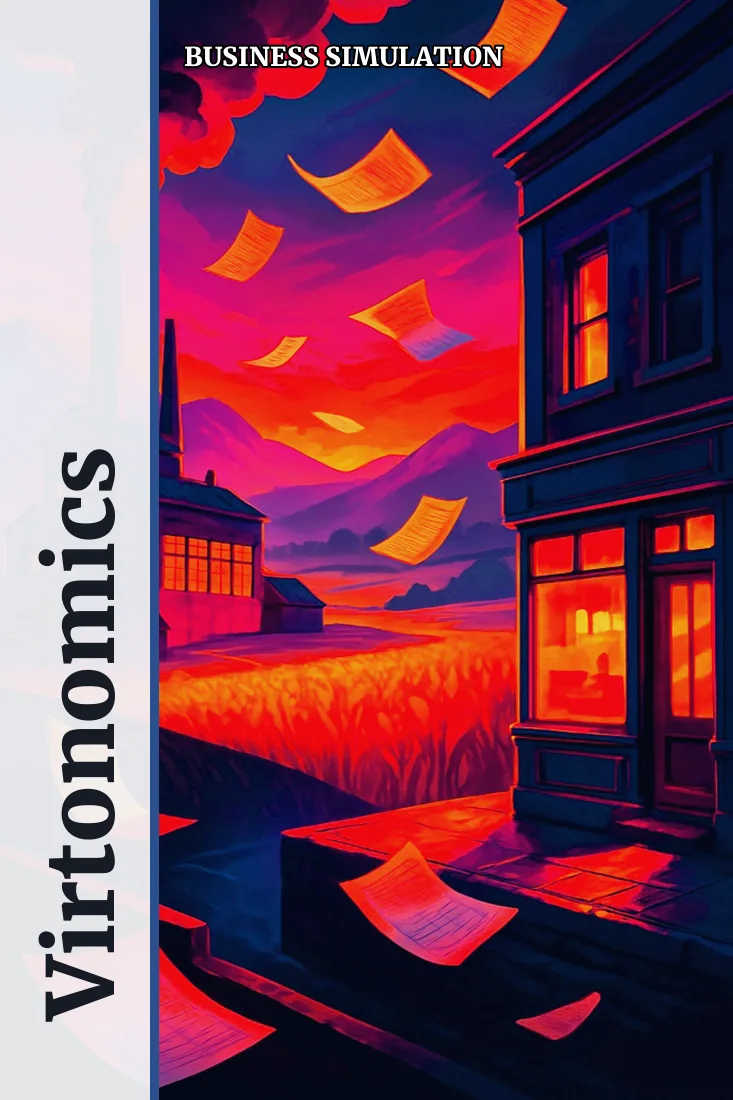
VirtonomicsOne turn a day03
Daily-turn economy sim

Virtonomics

A multiplayer economy of factories, mines, farms, research centres and shops spread across more than two hundred industries. The whole world updates once a day, so every player’s decisions resolve together. You plan, submit and wait, which makes it the purest test of judgement in the genre and the kindest to a busy schedule.

Build supply chainsPlayer-driven marketsOne tick a day
Desktop browser; mobile app also available
Depth of the model9
Market realism8
Free-founder headroom7
Fits a busy week9
Airlines Manager: TycoonBest for map lovers04
Airline tycoon

Airlines Manager: Tycoon

Run an airline across a live map of real airports: choose city pairs, size aircraft to demand and finance a fleet by negotiating with the game’s bankers. Research projects and cabin services shape each route, and alliances let you grow with teammates. Two speeds, real time and accelerated, suit very different weeks.

Real airport routesFinance a fleetR&D and cabin fit
Desktop browser; mobile app also available
Depth of the model8
Market realism6
Free-founder headroom7
Fits a busy week6
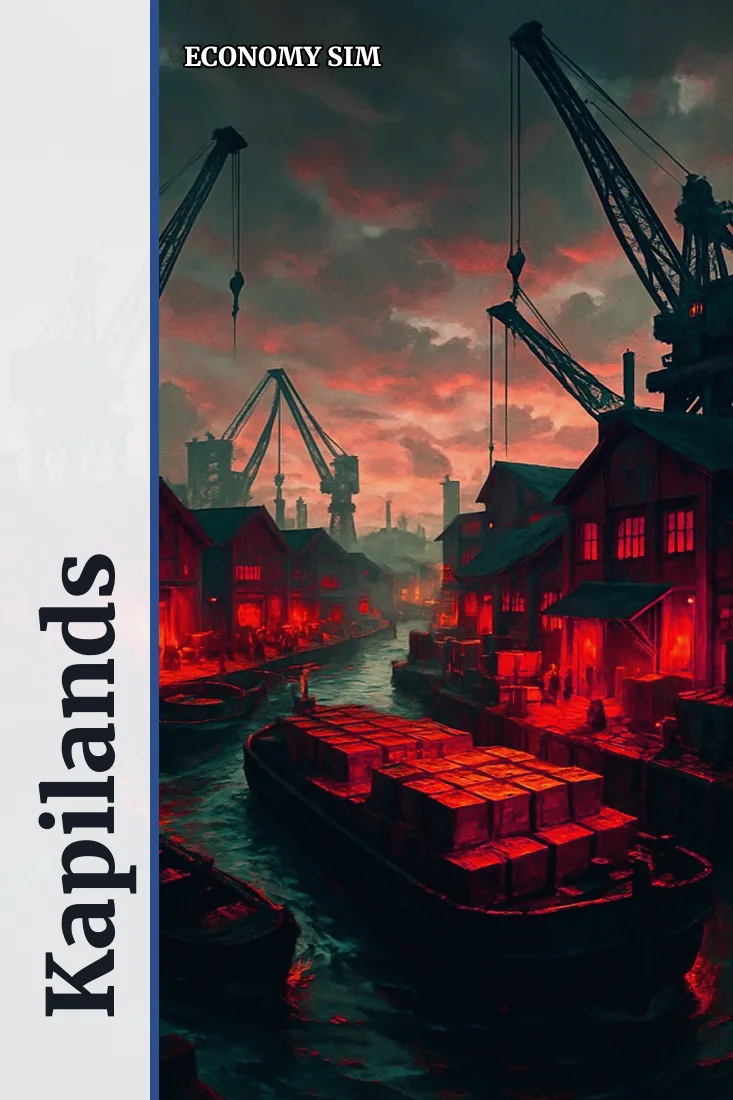
KapilandsMost hands-on05
Production economy

Kapilands

A long-running browser economy from upjers with more than forty production facilities and up to a hundred products. You buy raw materials, manufacture goods of varying quality and sell into a market that follows supply and demand, haggling with other players and striking contracts in chat. Busy, sociable and rewarding to tinker with.

Production chainsPlayer-run marketPrice competition
Desktop browser
Depth of the model7
Market realism7
Free-founder headroom8
Fits a busy week6
Kapi HospitalGentlest start06
Hospital management

Kapi Hospital

A light-hearted upjers management game in which patients arrive with absurd complaints, from smelly feet to a downy beard, and need the right room and the right treatment. You hire doctors and nurses, buy equipment and grow a small clinic into a large medical centre. No market to read, just a tidy, cheerful routine.

Treat patientsHire & equipWard expansion
Desktop browser
Depth of the model5
Market realism3
Free-founder headroom8
Fits a busy week7
Sort, filter and search every firm →
Balance sheets

Weigh two firms side by side

against
Time to incorporate

Your first company is one click from the paperwork

Pick the economy that matches your week, found a small firm and give it a month before you judge it. The best stories in this genre start with a bad first sale. Keep the games you like on your shortlist, and come back to compare them once you have a feel for the market.